Sustainable Schiebroek-Zuid
Redevelopment of post-war social housing
“This project introduced, for one of the first times, a complete sustainable transition plan for a large social housing area, towards self sufficiency, that is both realistic, feasible, and became wildly successful particularly on social impacts.”
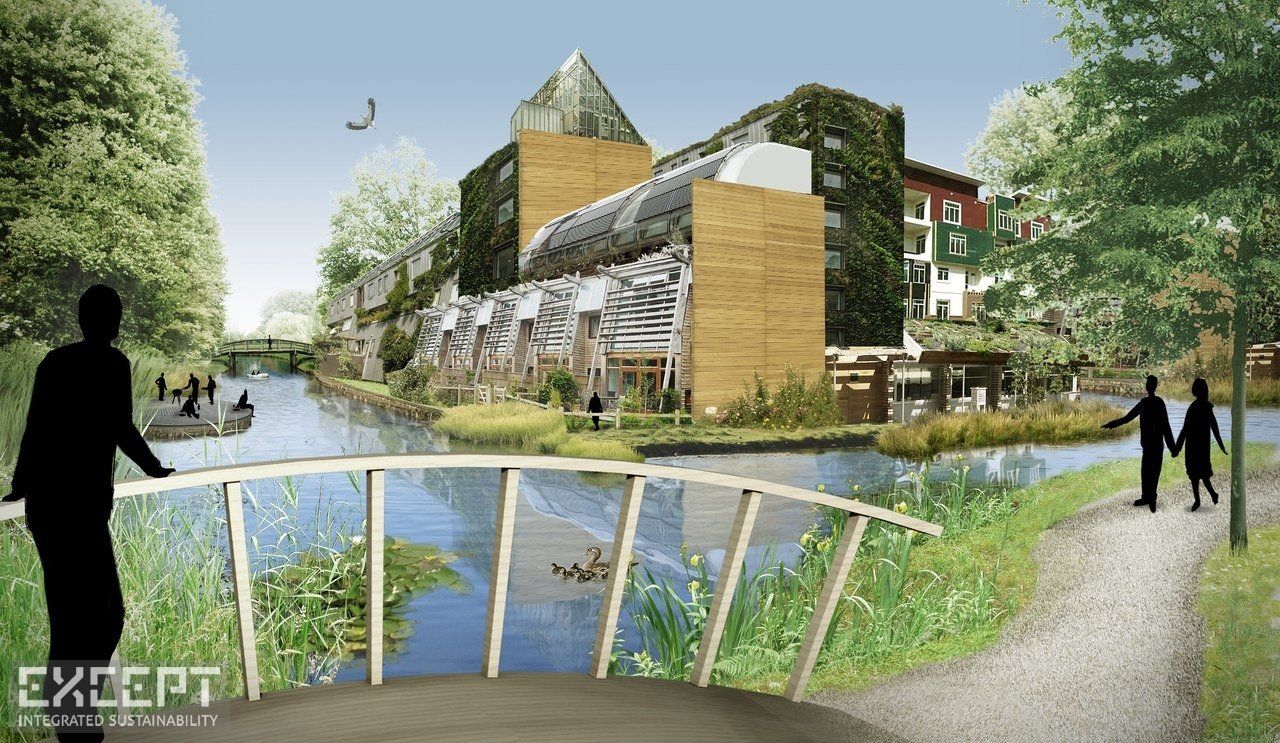
The initiative centered on Schiebroek-Zuid, a problematic post-war social housing area in Rotterdam. The transition plan involved hundreds of residents and established a 20-year roadmap for adaptive redevelopment across physical, social, programmatic, and ecological dimensions. The plan applies innovative energy solutions, urban farming, social and economic programs, secondary currencies, and adaptive redevelopment strategies. Clients included housing developer Vestia and agricultural research network InnovatieNetwerk.
Social Housing Conversion
“The Sustainable Schiebroek-Zuid project provides a template approach to converting a commonly problematic post-war social housing typology into a beautiful, equitable, resilient, sustainable community.”
The neighborhood uses proven, standard technologies in innovative ways, combined with ‘biological engines’ to provide water, electricity, heat, waste processing, and 70% of food production.
Closed-Loop Metabolism
The plan combines socio-economic programs and proven technologies to create closed-loop urban metabolism. All energy and water are locally provided, and most wastes are handled on-site. Local agriculture serves as the “biological engine” driving energy generation, nutrition, education, recreation, social programs, and local economic activities.
Integrated Sustainability
Except employed its Symbiosis in Design (SiD) approach to develop extensive measures or ‘ingredients’ that can be mixed and matched over time to achieve the end vision. These were designed cooperatively with stakeholders and residents. SiD facilitates and assures integration of many sustainability elements in a cooperative framework.
Social and Economic Development
Ingredients include social programs for neighborhood target groups: the elderly, children, teenagers, immigrants, and entrepreneurs. A marketplace and community center serve as central hubs for new neighborhood activities. Flexible ateliers provide spaces for startup companies functioning as craft workshops, offices, kitchens, or storefronts. A local currency encourages local trade and incentivizes energy-saving or waste reduction efforts.
Resource Self-Sufficiency
“The area can supply its required electricity and heat by utilizing biogas-fueled power plants, solar installations, and heat capture from rooftop greenhouses.”
Edible landscaping uses previously empty lawns while connecting residents to natural surroundings. A vital feature involves renovating rather than demolishing most existing buildings, reducing social disruption and environmental impact. Contractor Vestia began implementing several plan ingredients, with hopes this serves as an example for similar social housing areas worldwide.
Clients: Vestia (housing developer), InnovatieNetwerk (agricultural research network)