SiD Learning & Documentation
Explore the SiD framework through detailed documentation articles, the comprehensive Omnibus book, and quick-start guides available in English, Japanese, and Traditional Chinese.
What's Available
Four ways to access the SiD framework. Start with whatever fits your pace.
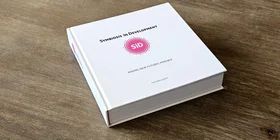
Omnibus Book
The complete 460-page reference. Theory, method, process, and tools. Everything in one place. Available as a downloadable PDF.
Download PDF →
Quick Guide
A concise 50-page summary of the full framework. Available in English, Japanese, and Traditional Chinese. Perfect for teams and workshops.
Get Quick Guide →
Learning System
Structured video courses with exercises, quizzes, and a certificate. Covers Foundation, Theory, Method, and Tools. Learn at your own pace.
Start Learning →
Online Reference
All 36 framework articles, free and open. Browsable by component (Theory, Method, Process, Tools) or searchable by topic. No account required.
Browse Articles →Browse by Component
SiD consists of an Overview, Theory, Method, Process, and Tools. Start with the overview for orientation, then go as deep as you like. Looking up a term? The Glossary defines 30 key SiD terms and cross-references them.
Overview
What SiD is, how it was developed, and where to find all the resources. The essential starting point.
SiD Theory
The foundational concepts: sustainability defined precisely and actionably, ELSI (Environment, Liveability, Social, and Institutional: the four dimensions of sustainable systems), the RAH indicators (Resilience, Autonomy, and Harmony: the three system-level meta-indicators), the anatomy of systems, analyzing complexity, system dynamics, and how to improve complex systems.
SiD Method
The step-by-step approach: goal setting, system mapping, system understanding, solutioning and roadmapping, evaluation and iteration.
SiD Process
Day-to-day practice: how to design a process, build a team, involve stakeholders, and manage a project from initiation to execution.
SiD Tools
A collection of analytical and creative tools that plug into any SiD process: from LCA and biomimicry to backcasting and circular economy.
SiD in Practice
How SiD applies to real-world domains: ESG, urban development, investment, policy, and business strategy.
Cases & Articles
See the framework at work in case studies, and read longer articles applying SiD to current topics such as ESG, resilience and regenerative cities.
Browse Cases & Articles