Process Design
From Method to Practice
The SiD Process translates the Method into day-to-day practice. Where the Method describes what to do, the Process describes how to organize the work: building teams, involving stakeholders, managing timelines, and structuring deliverables.
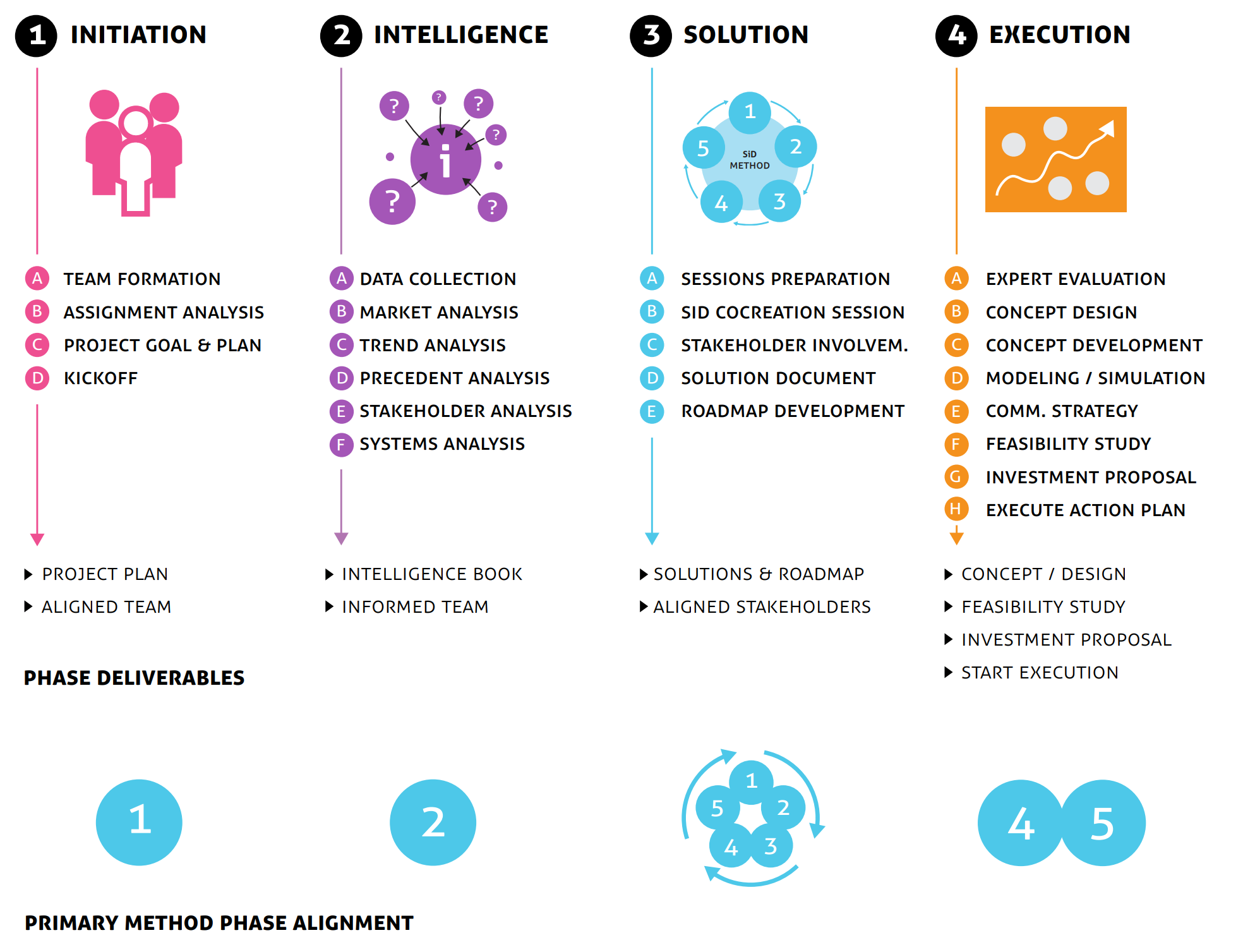
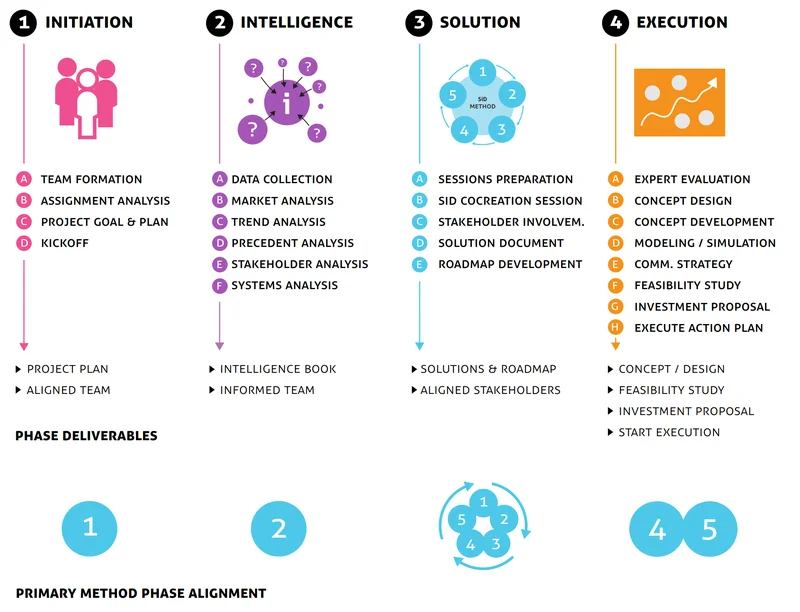
A SiD process typically follows four phases: Initiation, Intelligence, Solution, and Execution.
The LEGO-Block Approach
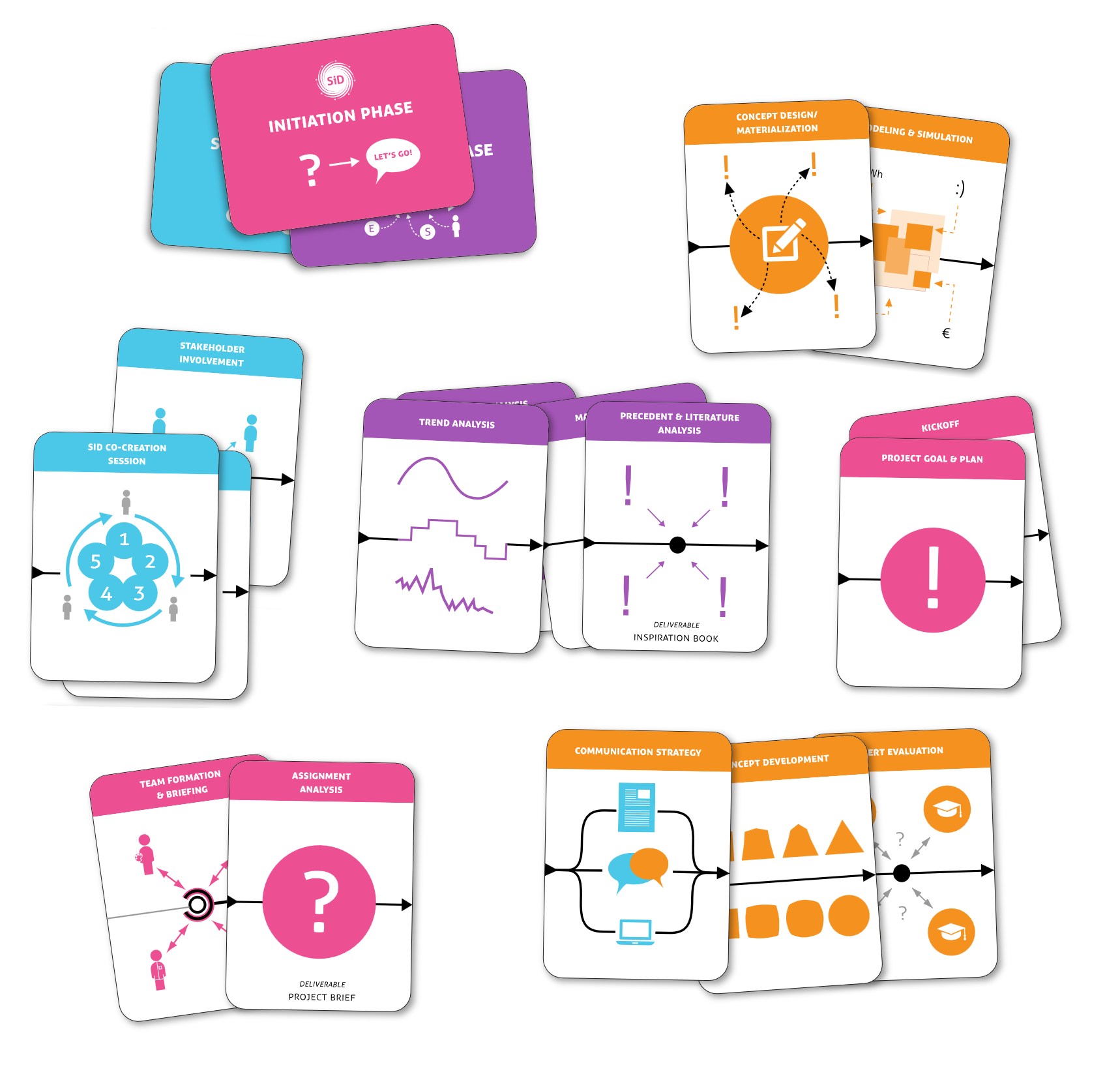
Building a SiD process is like playing with LEGO blocks: you stack standardized pieces on top of each other to make a whole. Each piece is a process step. So each process can be unique while still being composed from standardized components. A set of printable process cards (one per step, color-coded by phase) is available from the ThinkSiD website to support physical process design with teams.
Designing Your Process
Every SiD process is different. Key variables that shape design:
Scale: A neighborhood project requires a different process than a national policy trajectory or corporate strategy.
Resources: Time, budget, team size, and expertise determine how many method cycles are feasible and how deep the analysis can go.
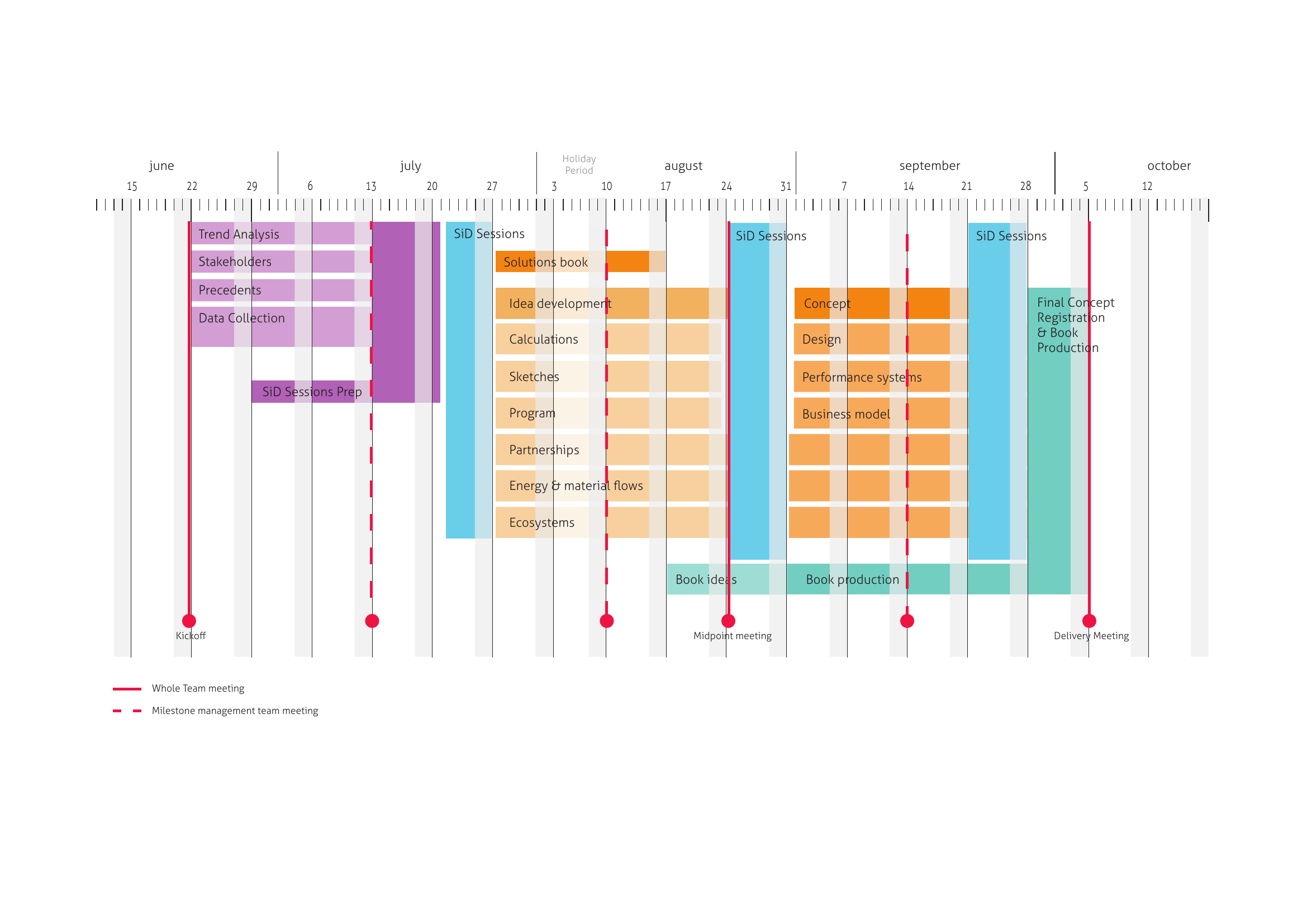
Stakeholder landscape: Number and diversity of stakeholders shapes the participation strategy.
Existing knowledge: If good system analysis already exists, the process can start from a more advanced position.
In the sections in the book, we represent process steps as playing cards. This indicates that for each process you design, you can move them around as fits.
These could then be arranged for a specific process, like so:
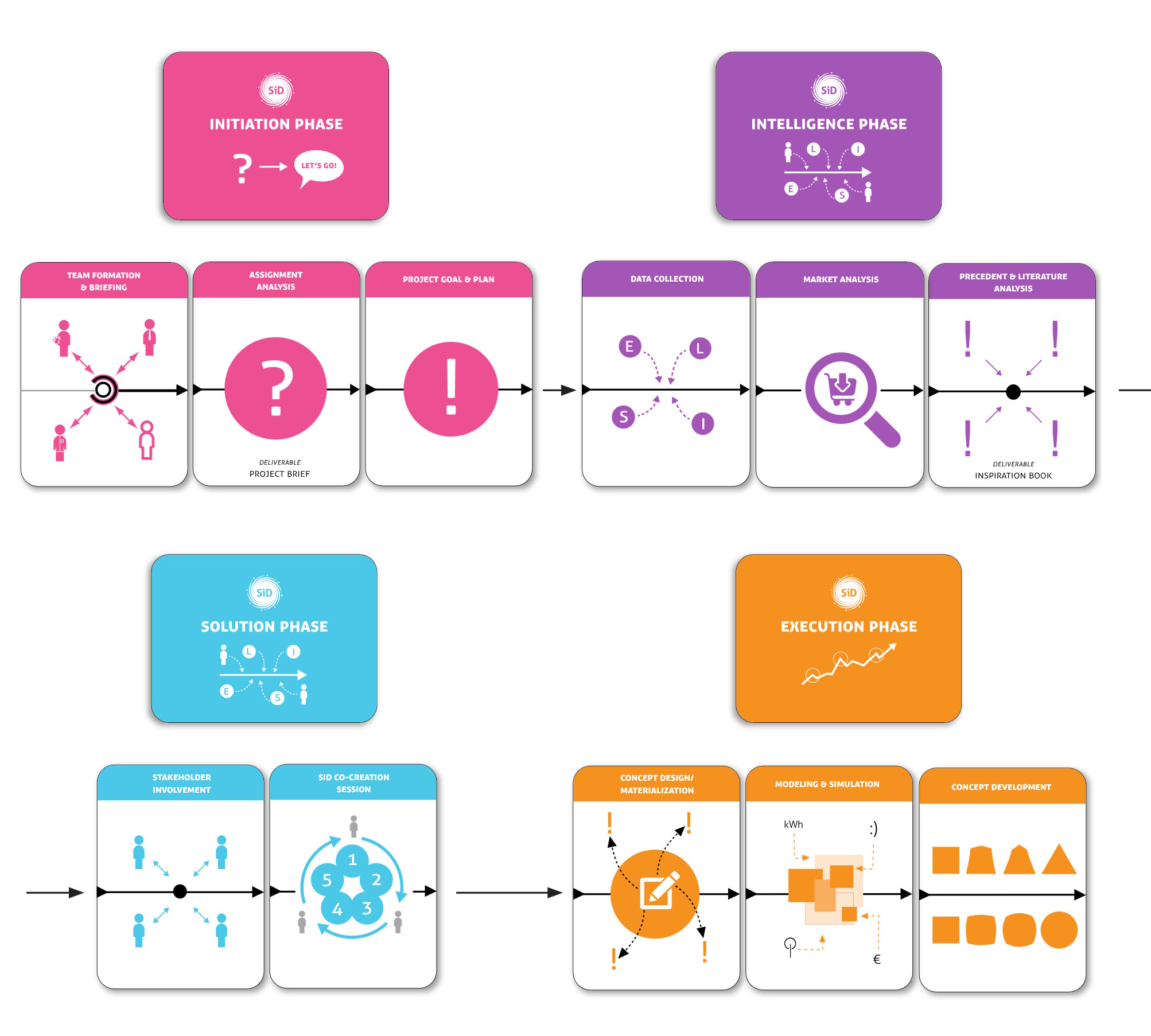
Details on each main phase are in the subsequent sections. For details on each step, consult the SiD Omnibus book (free PDF download).
Starter template
The below diagram shows a starter template which has most typical modules listed. Also for this, the Omnibus books has many details for each step, the basics are explained here in this documentation in the next few steps.
Building a Team
A strong SiD team includes a process facilitator who guides method cycles and manages group dynamics; domain experts with deep knowledge of specific system aspects (ecology, economy, engineering, social science); creative thinkers who visualize systems and generate innovative solutions; and stakeholder representatives to keep the process grounded in real-world needs. Not everyone needs to be present at every stage: the facilitator and core team stay throughout while experts and stakeholders join at specific moments.
Example: Schiphol Catalyst
The process for developing the most sustainable office building at Schiphol Airport used a three-cycle approach. Session 1: five days with the core team only, building foundational understanding. Session 2: four days with 15 stakeholders, deepening analysis and generating initial solutions. Session 3: four days with roughly 40 stakeholders in revolving groups, refining solutions and building broad support. The result: a catalytic building standard that transformed the entire airport development.
Found a problem? Log in to report an issue.