Case Study: IKEA Self-Learning Supply Chain
Case Study: IKEA Self-Learning Supply Chain
How a systems approach turned 200 million catalogues into a lever for global change.
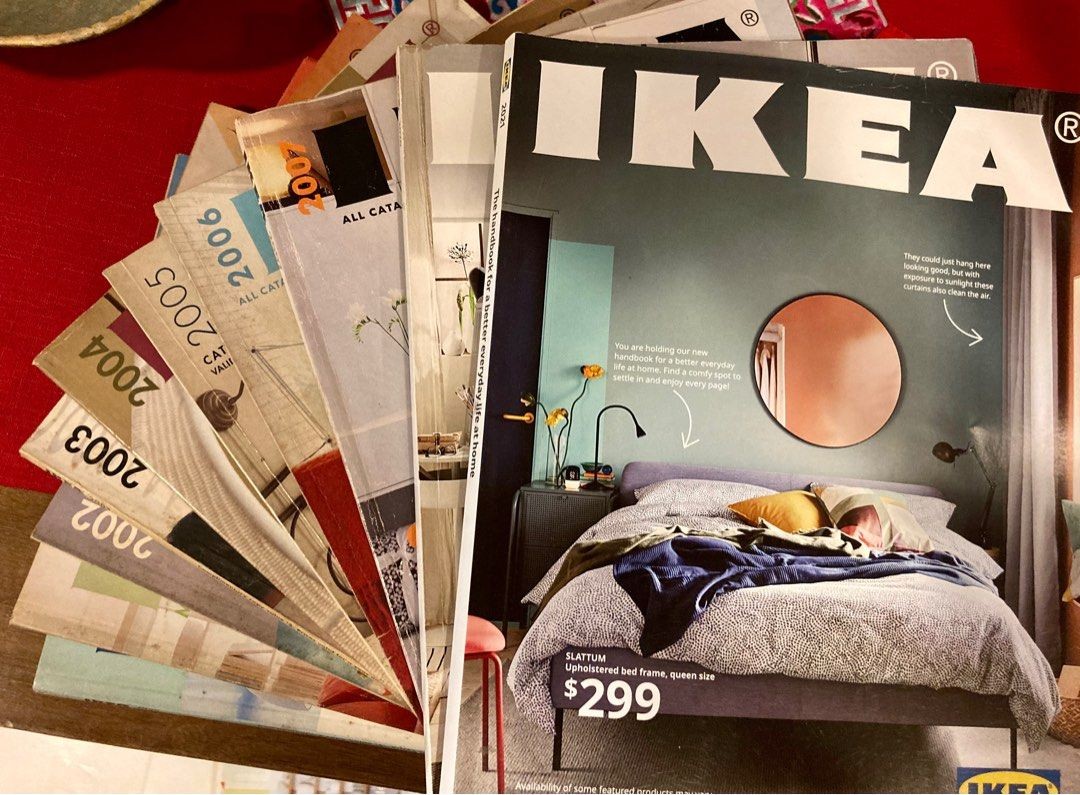
In 2014, the IKEA catalogue was the most printed publication on Earth: over 200 million copies per year, in 32 languages, distributed to 50 countries. Its paper and print supply chain consumed energy equivalent to the entire economy of South Carolina. IKEA had already achieved 100% FSC certification for its paper, but knew the real gains lay deeper in the system.
Having exhausted conventional life-cycle approaches with Deloitte and KPMG, IKEA turned to Except Integrated Sustainability and the SiD framework. What followed is one of the most remarkable demonstrations of systemic leverage in modern sustainability practice.
Phase 1: Understanding the System
The SiD process began where most consulting engagements end: with the data. IKEA had collected high-quality data on over 100 economic and sustainability metrics across 130 paper mills and printing factories worldwide. But the data had become too complex for any human mind to process. It was, in Matthieu Leroy's words, costly "information waste."
"Except helped us turn costly 'information waste' into a valuable 'information resource.'"Matthieu Leroy, Sustainability Specialist, IKEA Media Production
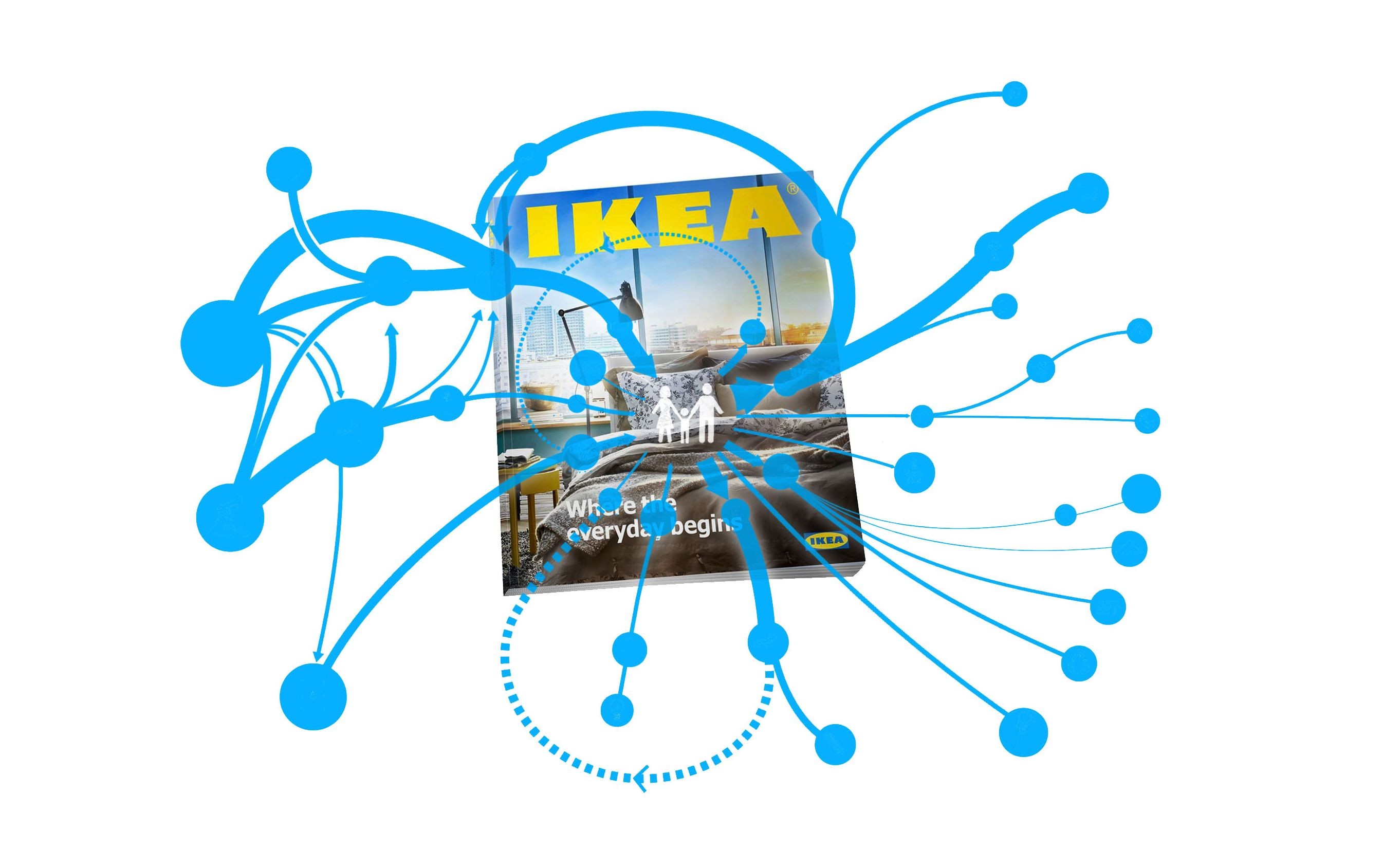
Using SiD's systems mapping approach, the team spent months mapping every node and flow in the supply chain: from forestry and pulp production through paper manufacturing, printing, distribution, retail, and recycling. The goal was not to optimize any single link, but to understand the system as a whole and find where small interventions could cascade into large effects.
Phase 2: Co-Creation and Intervention Design
In spring 2014, a dozen specialists from IKEA and Except gathered for a three-day co-creation session at Except's headquarters in Rotterdam. Using SiD's co-creation methodology, the team visualized the full life cycle of the catalogue, from logging and paper manufacturing to print, distribution, recycling, and reforestation.
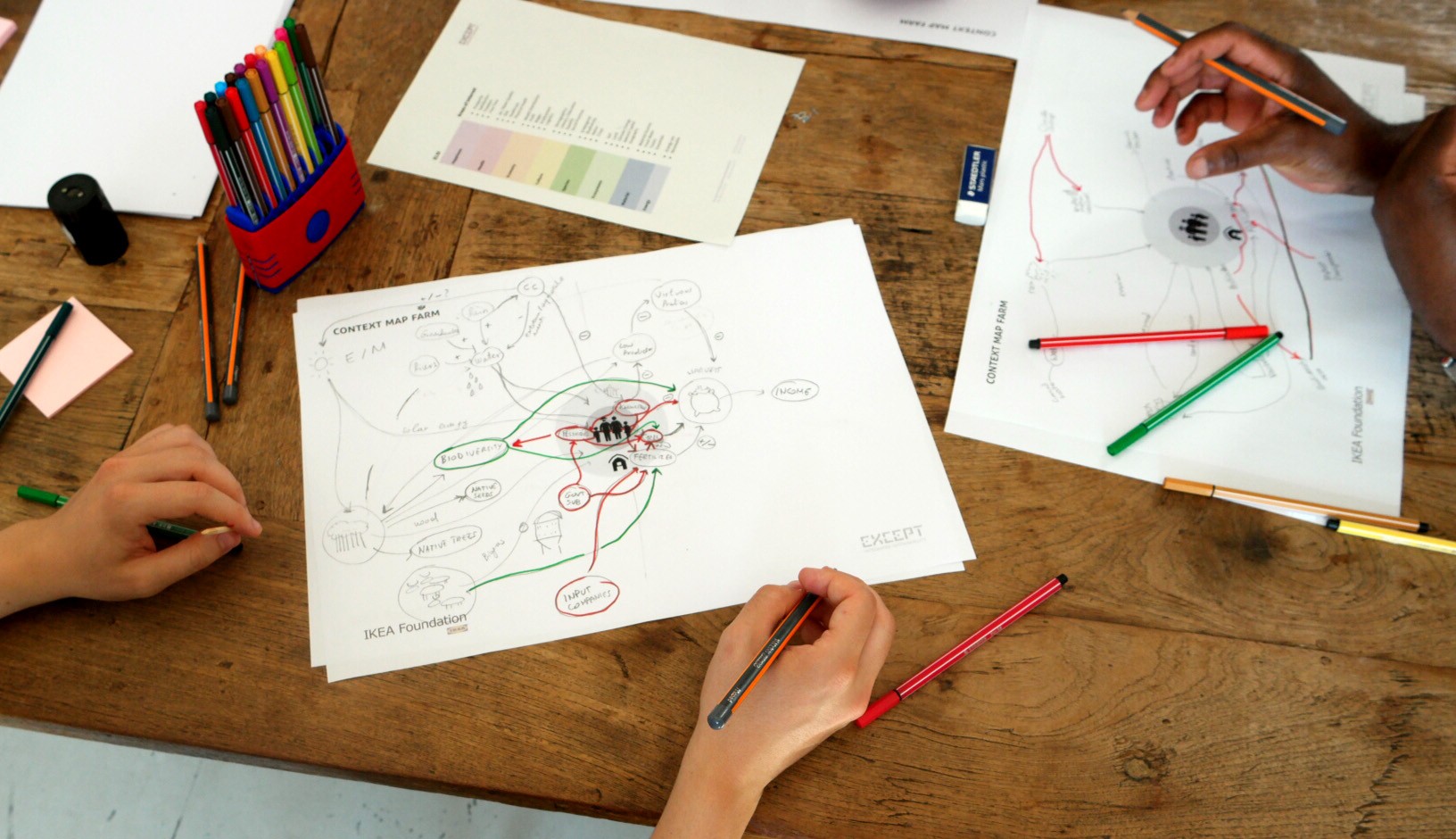
The critical insight from the co-creation sessions was that the biggest lever was not in changing any physical process. It was in how information flowed through the system. The data IKEA already had, if made visible and actionable to the right people at the right time, could transform decision-making across the entire supply chain.
This is classic SiD thinking: the intervention is not in the material flow but in the information architecture. Change how people see the system and they change how they act within it.
Phase 3: Building the Tools
Fast-forward eight months from that first co-creation session, and IKEA's purchasing managers had a completely new interface. The team clustered 100+ sustainability, quality, and economic metrics into 18 Key Performance Indicators, then designed intuitive visual dashboards that made thousands of data points instantly comprehensible.
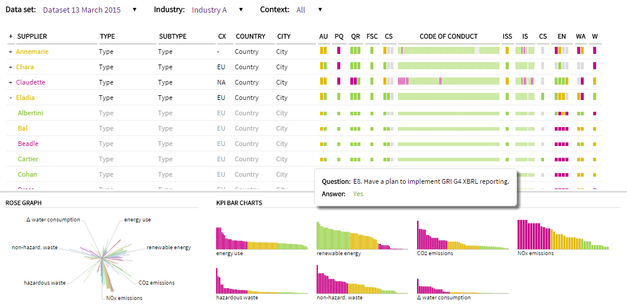
The data probe: software that helps peers in the supply chain compare performance, producing collaboration instead of competition.
Three tools emerged from the SiD process:
The Purchaser Dashboard gives IKEA buyers a color-coded overview of any supplier's sustainability and quality KPIs. Mouse-overs reveal granular data. This design gives users control over how they process information, leading to more holistic decisions.
The Supplier Brief gives suppliers access to anonymized comparative data, so they can see where they stand relative to peers and IKEA's goals. Instead of creating competition, this produced collaboration: suppliers began sharing best practices.
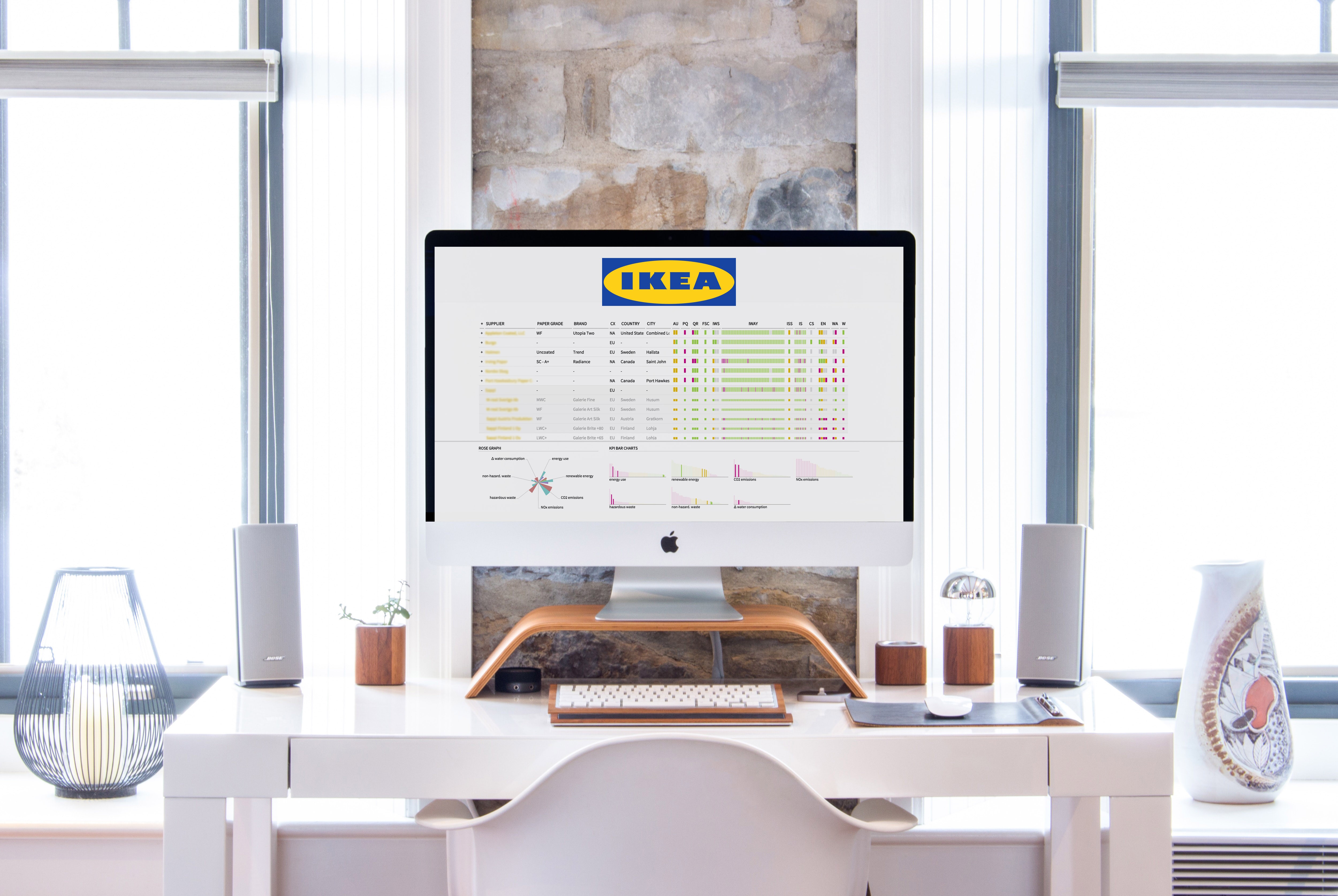
IKEA's data dashboards strengthen understanding and cooperation across the supply chain.
The Story of Print is a storytelling tool for customer-facing personnel, employing low information density to inform, inspire, and invite feedback from the public.
Phase 4: Results and Ripple Effects
The results were immediate and accelerating:
"In the first year, the catalogue's energy consumption dropped 8%, while CO2 emissions went down 2%. That may sound modest, but with a print run that has an energy footprint the size of the entire South Carolina economy, this adds up to 285,000 barrels of oil left in the ground each year from now on. Plus, these reductions have only just started to kick in and are accelerating."Matthieu Leroy, IKEA Media Production
By end of 2015, IKEA had achieved a 484 GWh reduction in energy consumption, the equivalent of 145,000 Swedish homes. CO2 emissions dropped by 19,000 tonnes. The 100% FSC certification goal was met one year ahead of schedule.
But the systemic effects went far beyond IKEA's own operations:
"These dashboards are strengthening the interactive, collaborative dynamic with all of our stakeholders, from suppliers to NGOs to the general public. I knew, as a big player, IKEA had the leverage to drive a transition toward greater sustainability in our paper and print supply chain. However, this project has made us an enabler of network learning at an industry level, and that's far beyond what we had expected or could have ever imagined."Matthieu Leroy, IKEA Media Production
The SiD Lesson
This project demonstrates several core SiD principles:
Systems over objects. The intervention was not a new material, a new printer, or a new process. It was a reconfiguration of information flows within an existing system. The same components, arranged differently, produced radically different outcomes.
Leverage over force. The total project cost was under US$500,000. The cost-benefit ratio for energy savings alone exceeded 200:1. Small, well-placed interventions in a complex system produce outsized results.
Transparency enables emergence. By making the system visible to its own participants, behaviors changed without mandates. Suppliers began collaborating because they could see the whole picture.
Self-learning systems. The dashboards did not just produce one-time savings. They created a feedback loop: better data leads to better decisions, which produces better data, which enables even better decisions. The system learns and improves continuously.
"I never fully realized IKEA's true power until we did this project. The results have been beyond our expectations."Matthieu Leroy, IKEA Media Production
Completed in less than a year, at a fraction of the cost of conventional consulting approaches, this project demonstrates the power of the SiD framework: understand the system, find the lever, design the intervention, and let the system do the rest.
This knowledge is free because of our supporters. Join them.