Process Design
Where this fits
This is the first section of the SiD Process chapter. Before any team forms or any data is collected, someone has to design the process itself. This section covers how to do that: assembling the right phases, appointing a project manager, and configuring the journey from start to finish.
Building with blocks
Designing a SiD process is like building with LEGO. You stack standardized pieces on top of each other to make a whole. The pieces are process steps, defined throughout this chapter. Each process is unique, but made from the same toolkit.
The process generally moves through four main phases:
- Initiation (team, goals, plan)
- Intelligence (research, data, stakeholder mapping)
- Solution (co-creation sessions, roadmapping)
- Execution (evaluation, development, communication)
For each project, you select and arrange the necessary steps across these phases, assess their requirements, build in buffers, set milestones, and create schedules. A quick one-day project and a multi-year urban transformation both follow this pattern. The difference is scale, not structure.
The project manager
Everything starts with appointing a project manager (PM). The PM receives the basic boundary conditions: a subject or question, a time frame, and a budget. From there, the PM designs the process, assembles the team, and bears final responsibility for the quality and delivery of the project.
If you are running a one-person project, the PM is you. For team projects, choose someone experienced in managing complex processes, and ideally experienced with facilitating co-creation and stakeholder sessions.
The PM must be involved from start to finish. They know all team members, have a solid grasp of the project requirements, and are familiar with the topic. A PM without content knowledge might not see trouble looming.
PM responsibilities
- Plan, schedule, and communicate every stage of the process
- Assemble and manage the team
- Make the necessary materials and tools available
- Structure discussions and working sessions
- Serve as the communication point for external parties
- Manage the project budget
- Bear final responsibility for the project
For large projects, designing the process is itself a group effort. A process for creating a process sounds redundant. But given how much the process shapes the outcome, it makes sense.
The SiD process room
When starting a project, reserve a room dedicated to the SiD process full-time. Here you keep all materials, and the team works together for the duration. This room ties the project together spatially and psychologically. Put everything on the walls. Make it the project's home base.
This is not the same as a SiD Session room (covered in section 3.4). The process room is your ongoing workspace; the session room is where intensive co-creation happens.
Process cards
Building a SiD process uses a card system. Each card represents a process step, color-coded by its typical phase. You arrange the cards to design your process. The color coding is a suggestion, not a rule. Steps frequently get used outside their "home" phase.
You can download and print the card deck from the ThinkSiD website, or order a pre-made set. There is also a workshop card deck with all SNO (System, Network, Object) elements for use during sessions.
Process examples
Product design
A product development process follows the standard four phases. In this example, the team chose to maximize intelligence gathering from stakeholders rather than from desk research. So the stakeholder involvement step comes before the SiD session in the Solution phase. In the Execution phase, the team follows their established product design trajectory, using the SiD session outputs as their design brief.
The flow: team formation, assignment analysis, project goal and plan. Then basic data collection, market research, and precedent investigation. Stakeholder session followed by SiD co-creation sessions. Then concept design, prototyping, testing, and development toward production.
Quick idea sessions
When you want to explore ideas or find inspiration with a small team, you can run a short SiD process in half a day to a full day. The core remains the co-creation cycle through the method. You can even execute these solo, taking on the scientific, creative, and business perspectives yourself.
These short processes also work well as a meta-exercise: use the SiD process to design the process for a larger project. In Except's experience, this is a helpful starting exercise with a new team. Together you explore what steps are valuable, when each step happens, and what the process goals should be.
Multi-cycle process: Schiphol Airport
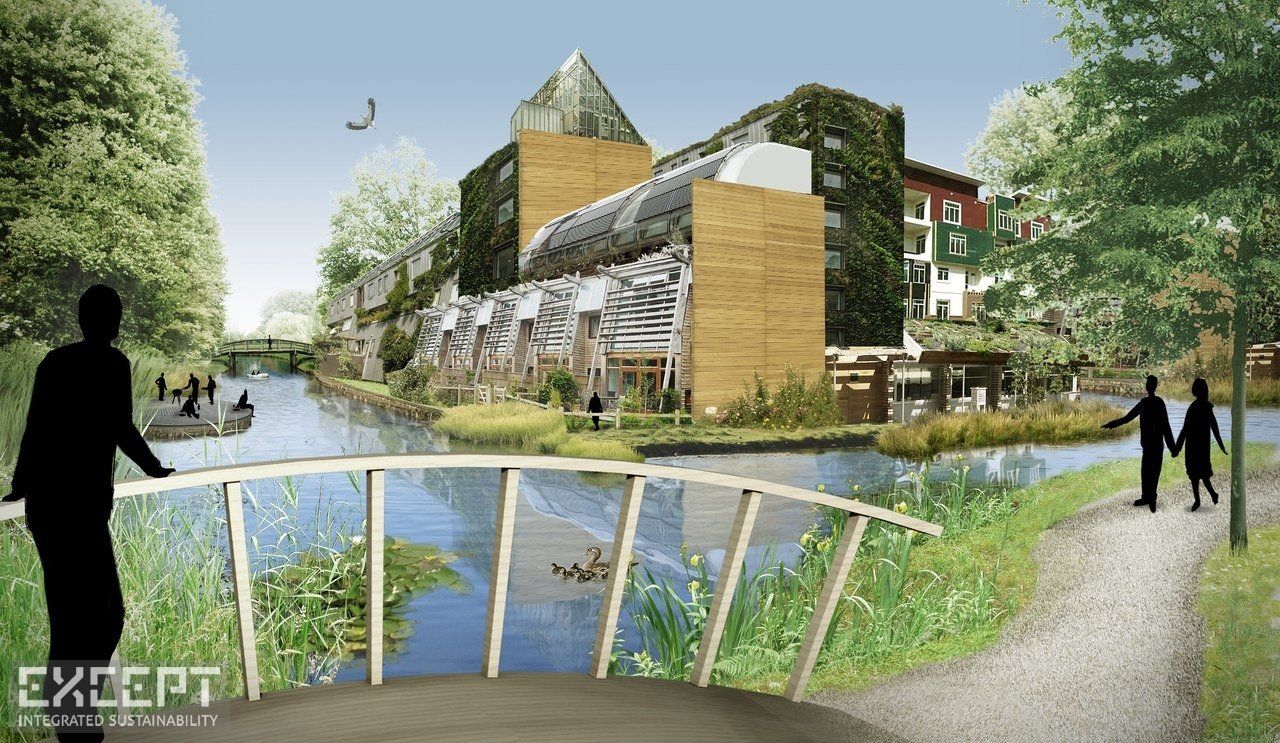
A condensed three-cycle SiD process was executed to develop a concept for the most sustainable office building in the world, for Schiphol Airport in Amsterdam. The challenge: fulfill this ambition while aligning with and gaining support from 70+ stakeholders.
Three sessions with different focuses:
- Session 1: Five days with the core team and two client representatives
- Session 2: Four days with about 15 stakeholders (22 people total)
- Session 3: Four days with about 40 stakeholders in revolving groups
The process was executed within the timeline. Results exceeded client expectations. The outcome, the Schiphol Catalyst concept design, set a new standard for high-performance sustainable buildings: the Catalytic Building standard, later released as a separate whitepaper.
Takeaway
Process design is the foundation. Good content follows from good process, the way good wine follows from growing the right grapes, picking at the right time, and fermenting for the right duration. Each project needs its own tailored process, assembled from standardized steps. Start with the PM, design the phases, and configure the blocks to fit your challenge.
Next up: the Initiation Phase, where the team forms and the project takes shape.
Exercise
Reflect and Apply
- The SiD process translates the method into a planned, step-by-step project with timelines, teams, and budgets. Compare your current project management approach to SiD's modular process design. What is similar? What is fundamentally different?
- The chapter describes the process as assembled from standardized components, like building blocks configured for each project. If you were to design a SiD process for your current project, which of the four phases (Initiation, Intelligence, Solution, Execution) would need the most time and attention? Why?
- Process design shapes results. Think of a project where the process itself (not the content) determined the outcome. What would you change about that process if you could redesign it using SiD's modular approach?
Share your reflections in the exercise submission below to earn 25 points.
Feedback
Community Responses

This knowledge is free because of our supporters. Join them.