SiD ELSI in Detail
What is ELSI?
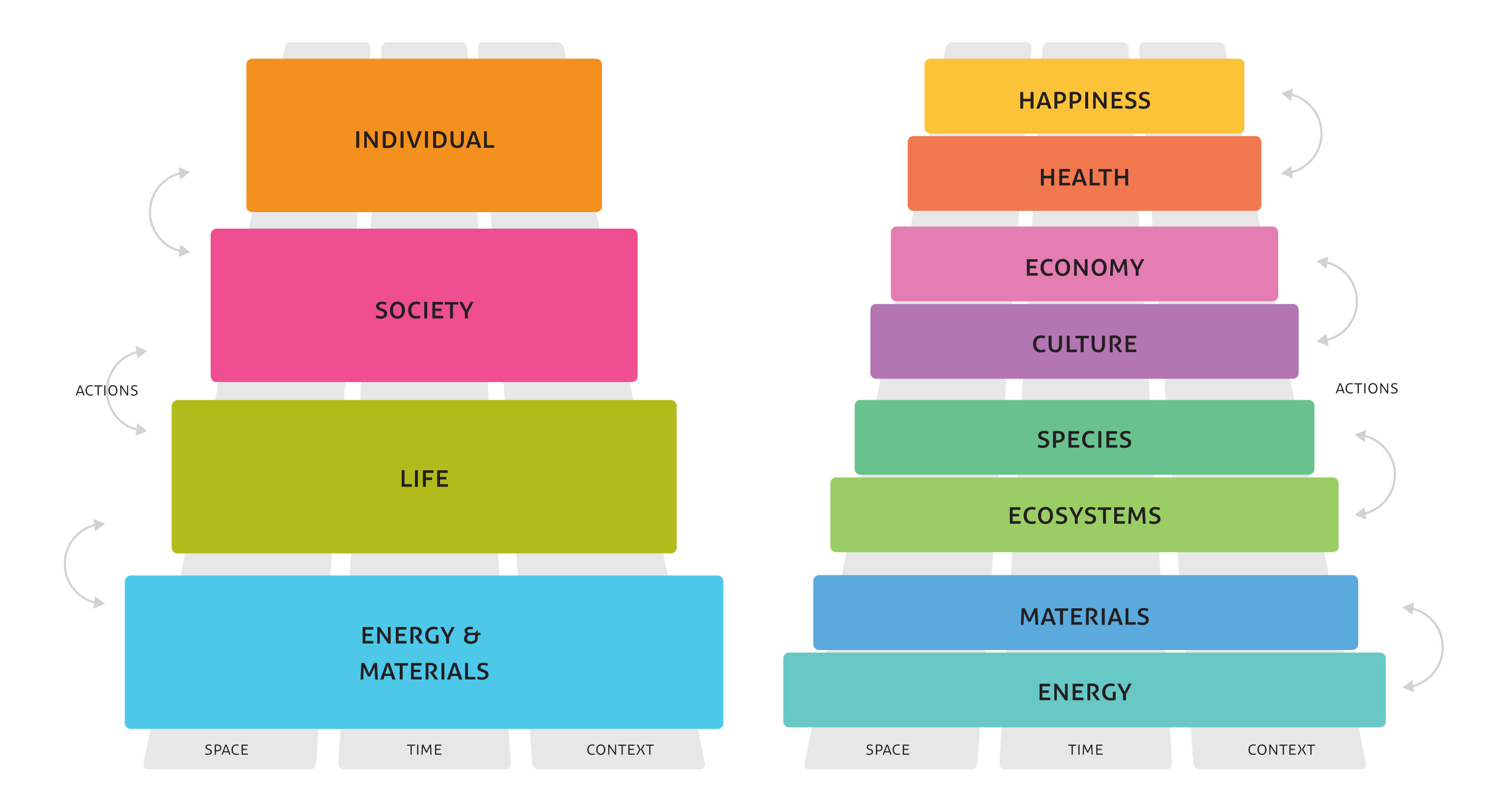
ELSI is a categorization framework for mapping all areas of integrated sustainability. It replaces the People-Planet-Profit model with a structured, hierarchical approach rooted in systems thinking. ELSI gives insight into both the spectrum of objects in a system and their dependency and causal relationships.
The Problem with People-Planet-Profit
The PPP framework misses aspects, lacks hierarchy, and bundles a contested "profit" component alongside ecological and social concerns. This leads to narrow focus on single areas (energy, waste) rather than integrated sustainability. When a framework omits categories, entire domains of impact become invisible. ELSI corrects this with a hierarchical structure grounded in causal dependency.
ELSI in Detail
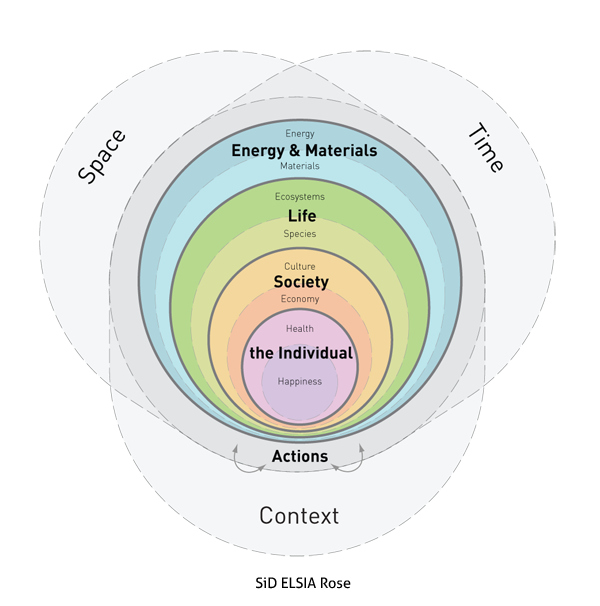
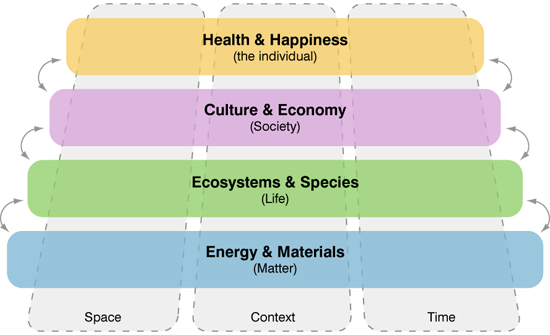
The four ELSI categories are causally nested: each layer depends on the one below it. When something happens to a lower level (such as energy or ecosystems), it affects everything above it. Ecology has a higher causal significance than economy, but both are important to support all individuals.
E: Energy and Materials (Matter)
The physical foundation of any system. All materials are made from energy, making this the base layer on which everything else depends. This category covers renewable and fossil energy sources, smart grids and storage, material flows, circular economy at the material level, toxicity, and bio-based alternatives. Any disruption at this level cascades upward through all other categories.
L: Life (Species and Ecosystems)
Biodiversity and ecological health. All ecosystems are composed of materials, creating a direct dependency on the Energy layer. This category covers climate change impacts, natural capital, the biodiversity crisis, ecosystem services, and biomimicry opportunities. Healthy ecosystems are the precondition for all human activity; their degradation undermines everything built upon them.
S: Society (Economy and Culture)
Social structures, economic systems, and cultural values. Human societies depend on healthy ecosystems to function. This category covers education and knowledge exchange, open-source collaboration, poverty as a systemic driver, the growth fallacy, labor value, and cultural resilience. Economy is not placed alongside ecology as an equal; it sits above it, dependent on it, and constrained by it.
I: Individual (Health and Happiness)
Personal wellbeing and fulfillment. Individual happiness depends on the health of the surrounding society. This category covers physical health (heart disease, pollution effects), mental health, the "silver society" challenge of aging populations, and the conditions for happiness: purpose, social connection, contact with nature (biophilia), and the ability to contribute meaningfully to one's community.
ELSI4 and ELSI8
ELSI4 (the four categories above) is used for communication and quick orientation. ELSI8 expands each category into two sub-domains for detailed scanning, indicator development, and brainstorming:
- Energy and Materials (from E)
- Ecosystems and Species (from L)
- Culture and Economy (from S)
- Health and Happiness (from I)
The eight sub-domains provide a complete checklist for sustainability analysis. When scanning a system, working through all eight ensures no major area of impact is overlooked.
ELSI in Practice
ELSI is used throughout the SiD Method. In Step 1, ELSI structures sub-goal development. In Step 2, it ensures mapping covers all domains. In Step 4, it organizes roadmap channels. And in Step 5, it checks whether solutions address the full spectrum or have created new externalizations. Combined with the three dimensions of Space, Time, and Context, ELSI provides a structured lens for any sustainability challenge.