Improving Complex Systems
Two Ways of Thinking
In the world of sustainability we see a split between two ways of thinking about systems. Understanding both is essential to effective systemic change.
The Reductionistic Approach
Reductionism is the dominant approach in science and forms the basis of most sustainability tools such as Life Cycle Assessment. Reality is understood by breaking it down into small components, each measured, calculated, and predicted. The reasoning: if one fully understands all components, one understands the whole.
This approach is vital for engineering and evaluating processes in reality. However, when applied to complex systems, numerical confidence creates a distorted picture.
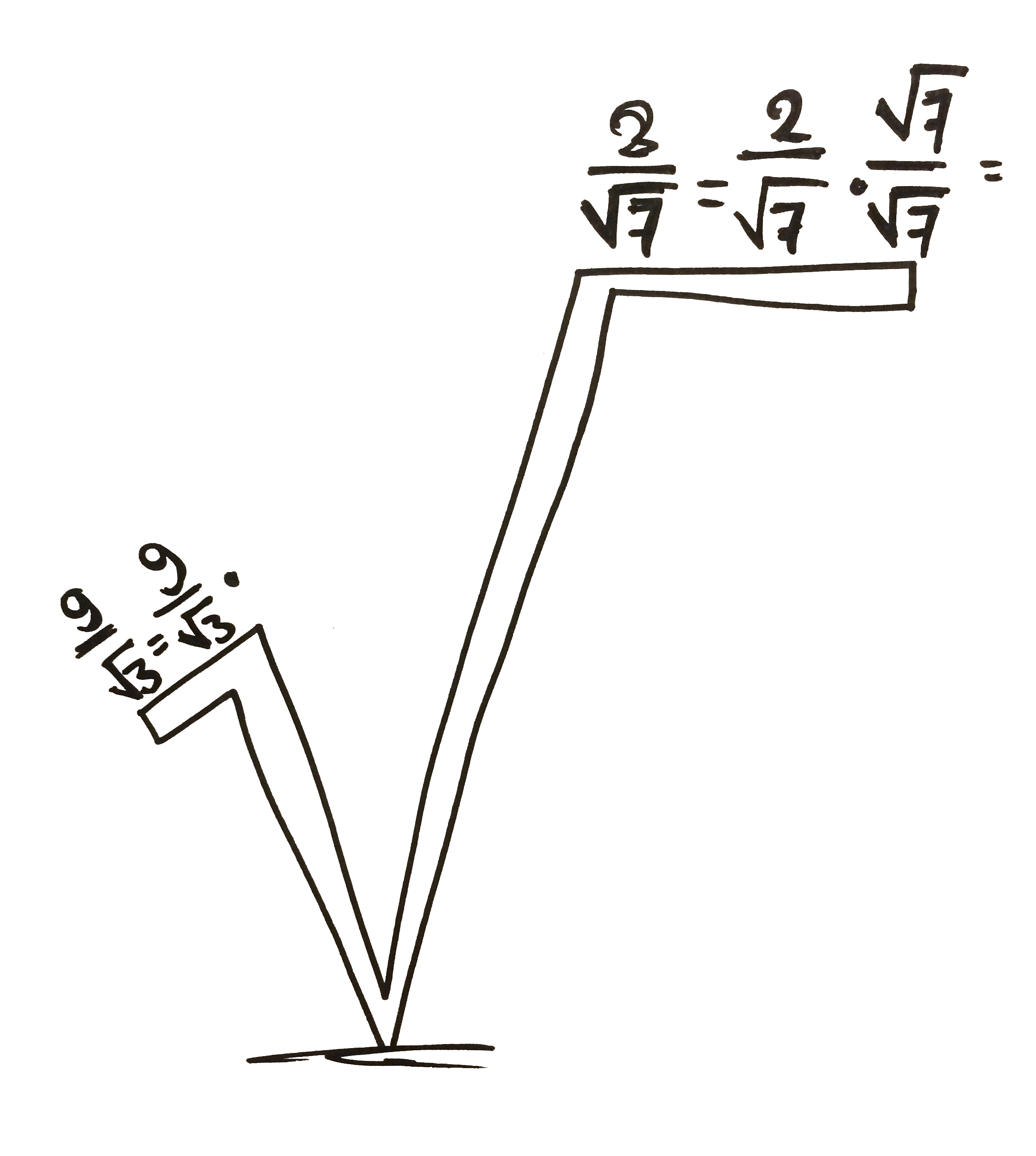 The objects and their interconnections create system dynamics that cannot be reduced to the sum of their parts. These systems cannot be modeled well, are impossible to predict, and attempts at doing so distract from the real issues.
The Holistic Approach
This approach looks at systems from a top-down perspective, focusing on emergent patterns rather than individual components. It accepts that complex systems cannot be predicted, and instead seeks to understand large-scale and long-term effects and behaviors.
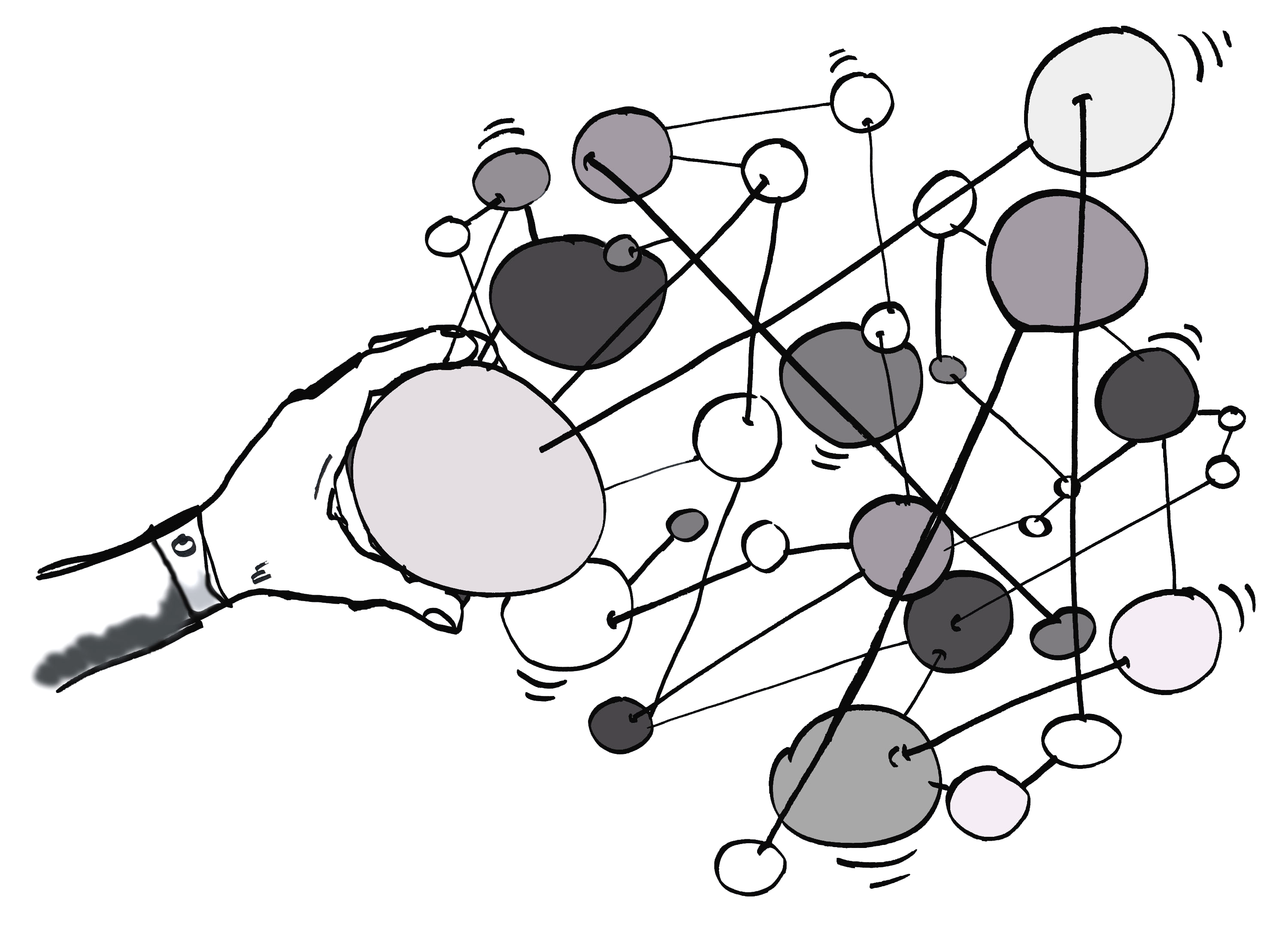
Holistic thinking relies on the human brain's pattern recognition capacity — vastly superior to our reductionist abilities in math and statistics. This is why system mapping plays such a vital role in SiD. By cooperating, patterns recognized by one person can be transferred to another, and combining different mindsets greatly enhances the process.
Combining Both
We usually start with a reductionist approach to explore the system, testing boundaries and investigating components. Then we rise to the network level where complexity manifests and behaviors emerge. Finally, the holistic approach at the system level brings oversight, clarity, and solution pathways.
These solutions, defined at the abstract system level, are interpreted at the network level and descend into the object realm where reductionism helps test them in reality. In synthesizing both bottom-up and top-down understanding, our minds create new connections and arrive at solutions that would otherwise never emerge.
Understanding vs. Predicting
Reductionist thinking assumes everything can be predicted if the model is refined enough. This is a red herring. Complex systems cannot be predicted this way.
Consider the weather. Despite technological advances, we cannot accurately predict it beyond a few days. Yet we can say with certainty it will not snow in July in New York City. We cannot predict, but we can understand the overall nature and character of a system.
Rather than modeling to predict, we model to understand. Understanding the properties and idiosyncrasies of complexity allows us to create systems better suited to adapt to changing, unexpected conditions.
Transitioning Systems
Once we understand how a system can be improved, we need to figure out how to get it there. We rarely work with newly created systems — most have been around for a long time. The transition from old state to new, desired state becomes the challenge.
Overstating Your Goal
Consider system A that we want to transition to state B. In complex systems, if we aim for B, various dynamics (historical momentum, rebound effects — see 1.7 System Dynamics) will cause us to land short. Therefore, we may need to aim for B* — beyond B — to actually reach B.
This is why we recommend ambitious goals. The usual practice of aiming low to avoid disappointment is counterproductive with complex systems. Push for ambitious goals each time, understanding that going too far over the top may also backfire.
Types of Transition Actions
When acting on a system to change its state:
Change — doing some things differently (phases: identification, optimization)
Start — doing certain new things (phases: experimentation, acceleration)
Stop — ceasing certain things (phases: reduction, phase-out)
Replace — substituting certain things with others (phases: implementation, institutionalization, stabilization)
Each action type requires a fundamentally different management approach, investment outlook, and organizational structure. Clearly identify these types in your roadmaps and action plans.
The DRIFT Transition Model
In cases where the transition itself is the main challenge, it is useful to map the transition state and process. The Dutch Research Institute for Transitions (DRIFT) developed a model that identifies the different phases of a transition, making it possible to map, analyze, and optimize a transition pathway.
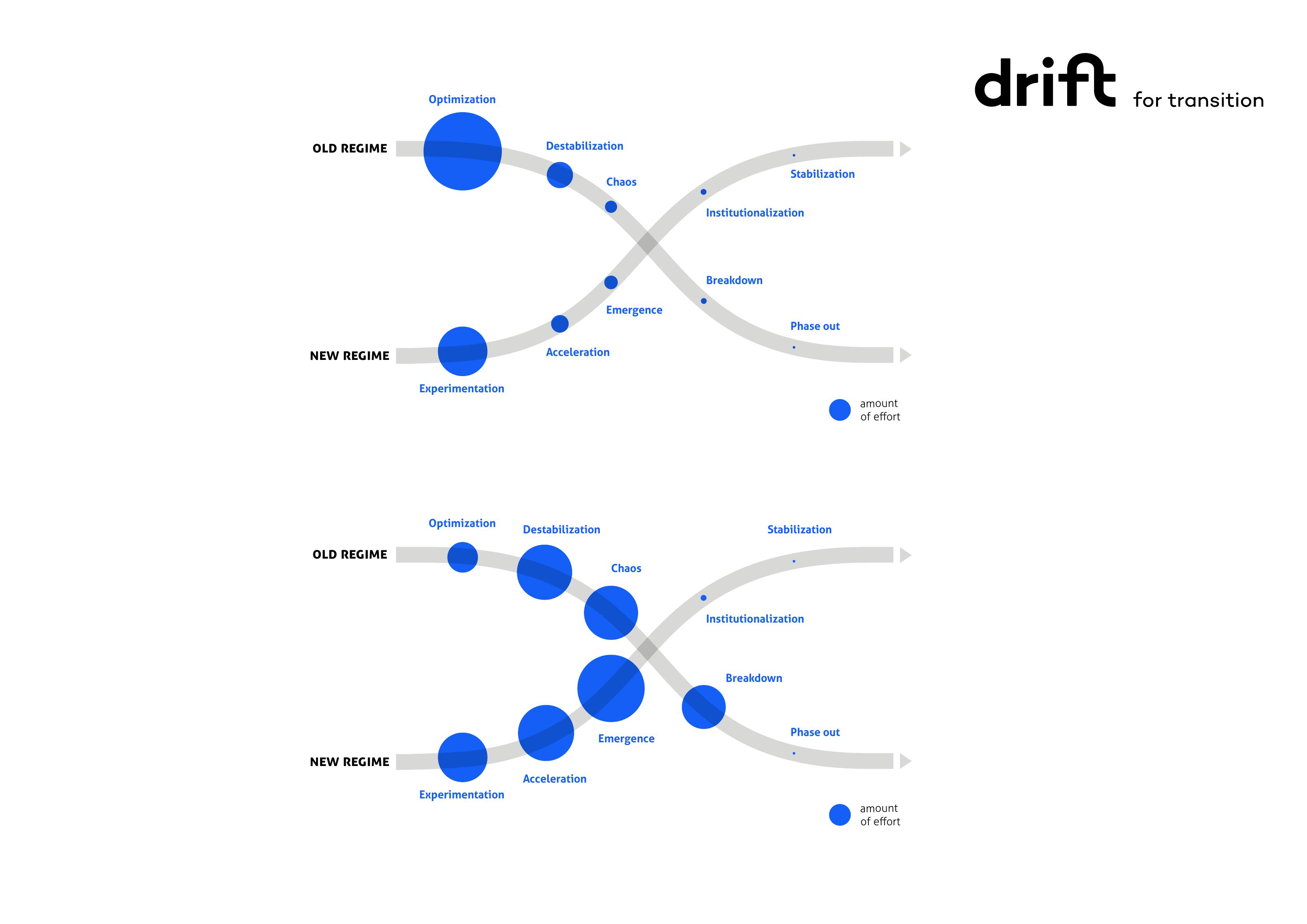
The DRIFT model maps two simultaneous processes: the decline of the old regime and the rise of the new. The old regime moves through optimization, destabilization, and chaos before reaching breakdown, institutionalization of the new, and eventual phase-out. Meanwhile, the new regime progresses from experimentation through acceleration and emergence. These two curves cross in an X-pattern, with the transition point being the most volatile and requiring the most careful management.
Using this model, you can identify which phase each part of your system is in, then develop targeted actions. An element still in the optimization phase of the old regime needs different intervention than one already in the acceleration phase of the new.
DRIFT applied this model to analyze the transition of the fashion industry toward circularity, supported by the C&A Foundation. The analysis mapped the current transition state, identified where the process could be accelerated, and derived new actions, focus areas, and programs to boost the transition. This kind of transition mapping can be integrated as a separate phase in the SiD roadmap creation process.
Roadmaps Prevent Lock-in
Working without a roadmap leads to high risk of systemic lock-in — a decision that locks the system's development in a fixed direction. For example, investing in a machine that only accepts certain input resources locks in the need for that resource for the machine's economic lifespan.
A roadmap towards 100% systemic sustainability helps prevent these lock-ins. With each solution step, we take into account the final goal. If a solution leads to lock-in further down the road, that becomes obvious in the pathway.
System Optimization Guidelines
Think in systems, act on objects. Set goals at the system level but implement through concrete object-level interventions.
Seek network-level leverage. The most powerful interventions are often found in how things are connected, not in the things themselves.
Embrace iteration. Complex systems require multiple cycles of analysis, action, and evaluation. No single pass will suffice.
Design for resilience, not prediction. Since you cannot predict what will happen, design systems that can adapt to whatever does happen.
Use both approaches. Combine reductionist precision with holistic insight. Neither alone is sufficient.
Allow time for incubation. System understanding and "a-ha" moments require mental rest and background processing. Do not cram a SiD process into too short a timeframe.
SiD Planning: A Symbiotic Approach
How should complex systems be improved? History offers two dominant models, each with clear strengths and weaknesses. SiD combines them into a third approach.
Top-Down Planning
A single vision, imposed from above. This enables bold, coherent transformations: Brasilia was built from scratch as a capital city following a unified plan. In corporate settings, top-down planning means centralized decisions and fast execution. The cost is human scale, adaptability, and entrepreneurship. Top-down plans often look elegant on paper but fail to account for the complex human systems they reorganize.
Bottom-Up Planning
Community-driven, entrepreneurial, responsive. Bottom-up approaches work well at small scales, stimulating local engagement and innovation. But they tend to self-construct hierarchy once a group exceeds roughly 30 people. Without shared direction, bottom-up initiatives can conflict, duplicate effort, or optimize locally while degrading the broader system.
Symbiotic Planning
SiD's approach combines the strengths of both. Apply the strength of top-down planning by setting long-term goals and development boundaries in a roadmap. Then fill in that roadmap with bottom-up short-term initiatives. This resembles a well-designed game: the rules and boundaries are set from above (top-down), the system develops freely within those rules (bottom-up), and incentives steer behavior toward systemic goals (running management). The result is a planning approach that is both directed and adaptive, coherent and responsive.