
Solutioning & Roadmapping
Step 4: How Do We Get There?
With understanding from Step 3, this step plots the route: identifying obstacles, designing interventions, and sequencing them into an actionable roadmap. Time available shapes not just the route but the "transportation": some solutions require long lead times; others can start immediately.
Finding Solutions
If solutions did not emerge during Step 3, several approaches help identify leverage points and gaps:
Network parameter analysis: Evaluate each network parameter to find where the system is weakest and where small changes could have large effects.
ELSI spectrum scan: Check each category for opportunities overlooked during mapping, especially less-examined domains.
Biomimicry and design thinking: Nature-inspired strategies and human-centered methods generate solutions at network and system level that conventional engineering misses.
Backcasting: Start from the desired end state and work backward to identify the steps needed to reach it.
The Block Transition Strategy
A practical framework for understanding systemic change. Imagine blocks on a table, connected by rubber bands (representing relationships). To move the system toward a new state:
- Determine agents: Identify who or what can move within the system.
- Create awareness: Help agents understand where they are and where they need to go.
- Align goals: Build shared direction among agents through co-creation and dialogue.
- Enable action: Push (incentivize), pull (attract), lubricate (remove friction), or tilt the table (change the systemic conditions). Tilting the table is the most powerful intervention: it changes the environment so that all blocks move simultaneously.
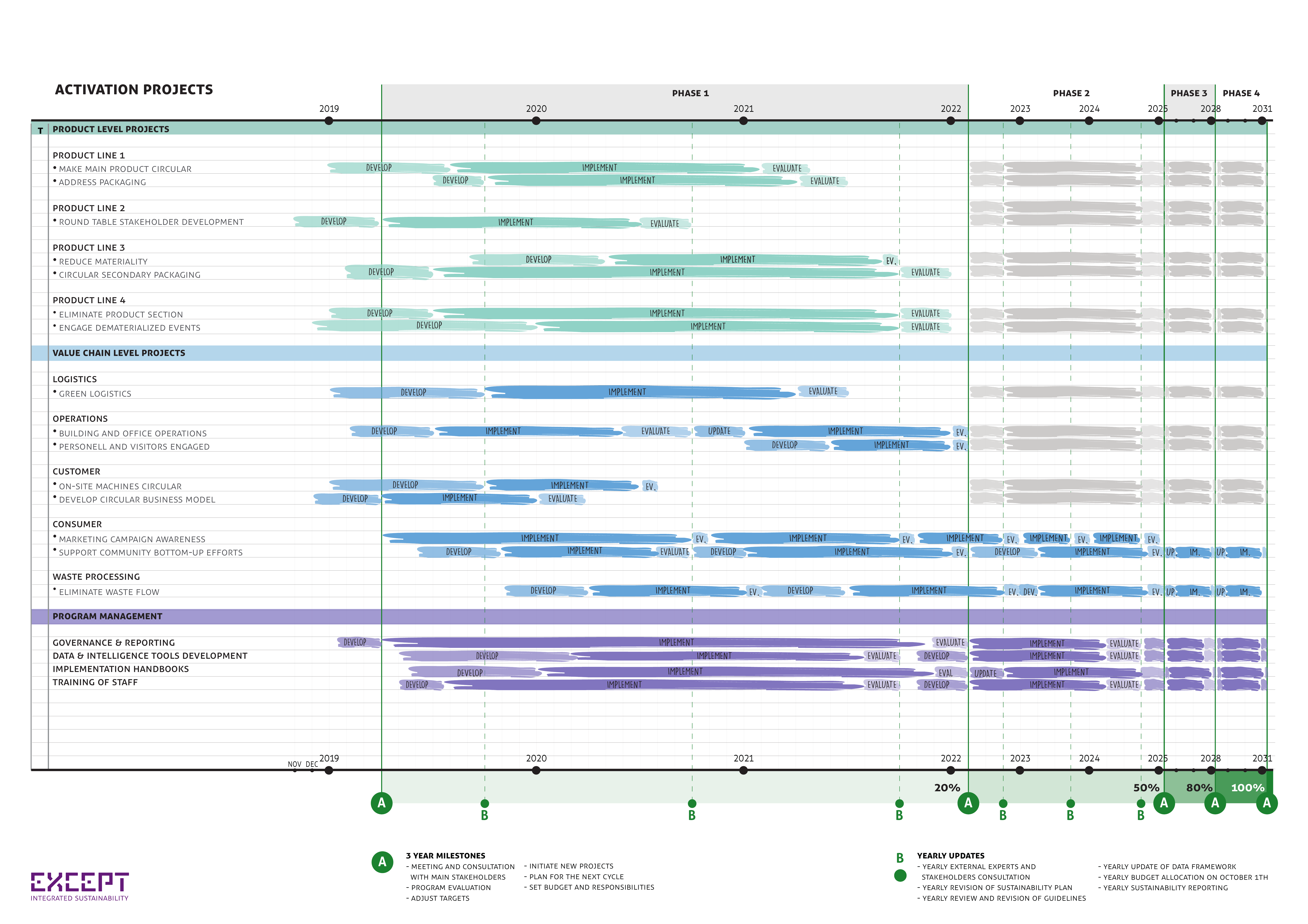
Building Roadmaps
A roadmap plots all actions along a timeline, typically spanning years or decades. Ten steps toward a complete roadmap:
- Draw a global timeline from now to the target date.
- Place the end-goal and set the ambition level.
- Review whether the ambition is realistic given constraints.
- Map solutions onto the timeline.
- Cluster and arrange interventions in channels (e.g., by ELSI category).
- Identify missing steps and dependencies.
- Identify the transition phase: the critical period where old and new systems coexist.
- Assign responsible parties to each intervention.
- Set milestones and reporting moments.
- Create a concrete action plan and evaluate.
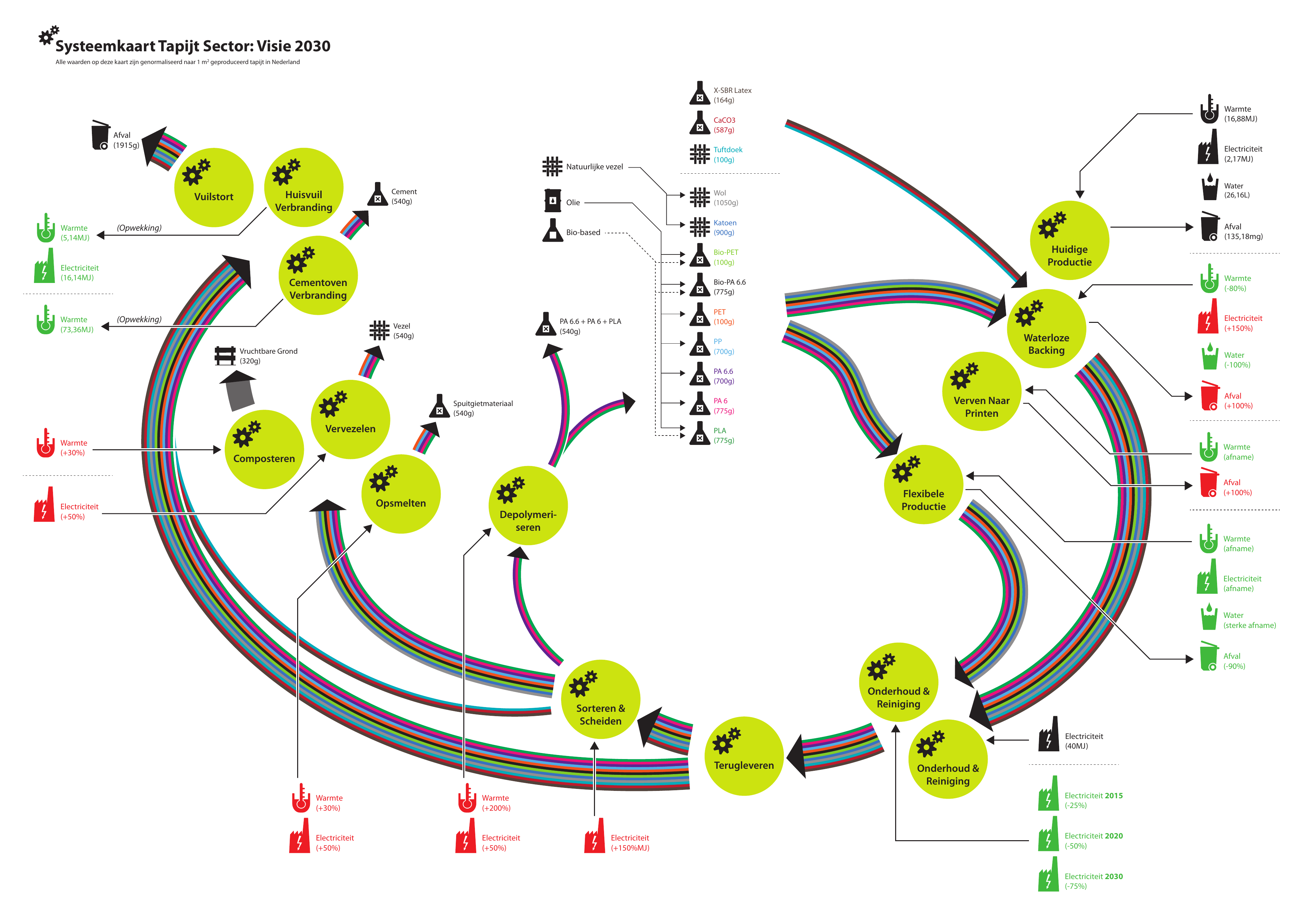
Classify each intervention as Change (modify existing), Start (introduce new), Stop (phase out), or Replace (substitute). Each type requires different management. Sequence for synergy: earlier actions should support later ones, creating positive cascading effects.