Execution Phase
Execution is where plans meet reality. A roadmap on a wall is not a transition. A set of solutions in a document is not change. Execution is the process of finalizing commitments, launching actions, monitoring results, and adapting the plan as the system responds. It is also, crucially, not the end. Execution is the beginning of the next cycle.
The execution phase translates the outputs of the co-creation phase into operational reality. It takes the draft roadmap and turns it into a finalized, committed plan. It takes the first action items and launches them. It sets up the monitoring and communication structures that keep the project alive over the months and years of implementation.
The Execution Steps
The execution phase typically includes:
- Expert evaluation and concept refinement
- Roadmap finalization
- Short-term action plan creation
- Responsibility assignment and commitment
- Monitoring framework setup
- Launch of first interventions
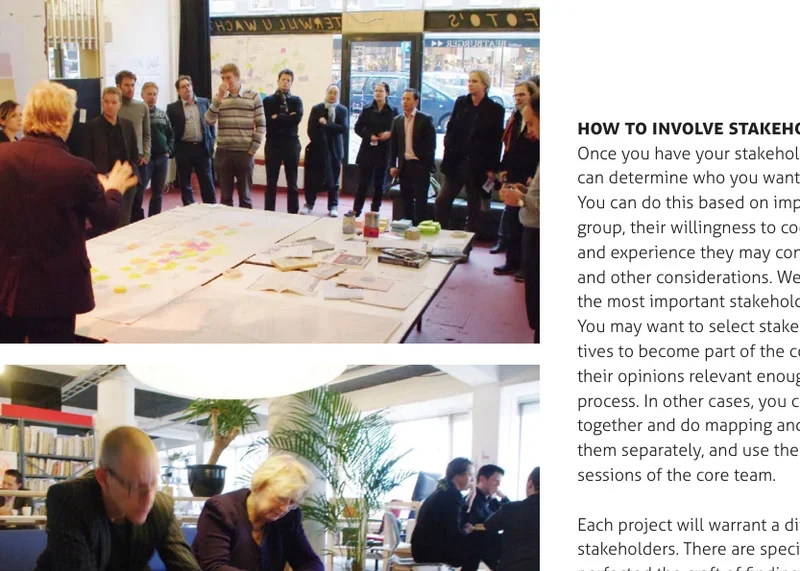 Communication plan
- Review cycle initiation
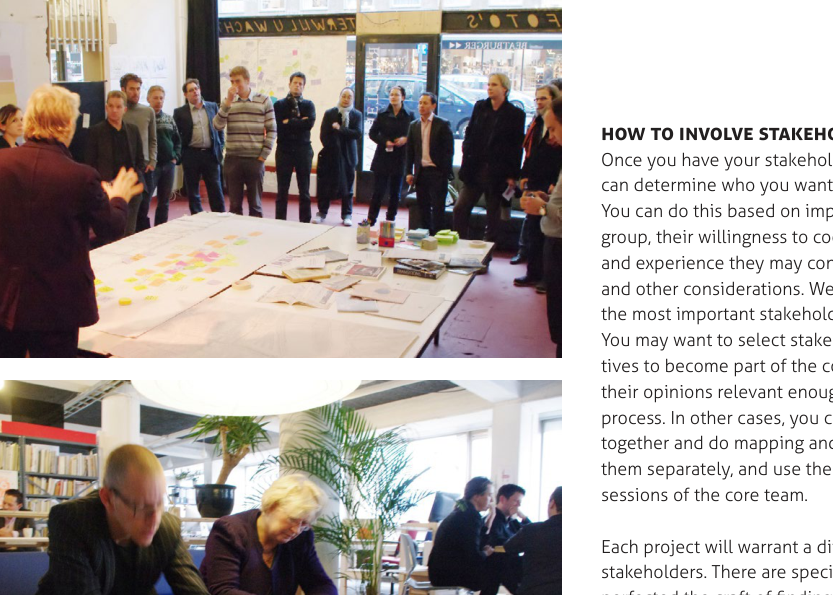
Expert Evaluation and Concept Refinement
Before finalizing the roadmap, subject the solutions and roadmap to rigorous evaluation. This may include:
- External expert review. Assemble a panel of domain specialists who were not part of the co-creation process. They bring fresh perspective and will identify weaknesses the team has become blind to.
- Feasibility assessment. For solutions that require technical implementation (buildings, products, infrastructure), develop concept designs and test feasibility. Modeling and simulation may be warranted.
- Financial modeling. Estimate costs, returns, and investment requirements for key roadmap items. Without financial viability, implementation stalls.
- Risk assessment. Identify what can go wrong, at what probability, and with what consequence. Build mitigation strategies into the action plan.
Roadmap Finalization
Take the draft roadmap from the co-creation phase and refine it based on expert evaluation. This involves:
- Adjusting timelines based on feasibility findings
- Removing solutions that do not survive expert scrutiny
- Adding solutions or preparatory steps that experts identify as necessary
- Confirming that all channels are complete and internally consistent
- Ensuring that the near-term action plan is specific enough to execute
- Verifying that the long-term trajectory still leads to the 100% goal
The finalized roadmap becomes the project's central strategic document. It should be clear enough that any new stakeholder can understand the direction, timeline, and their role within 30 minutes of reading it.
Short-term Action Plans
From the roadmap, extract the first 1 to 3 months of actions (for fast projects) or the first 1 to 3 years (for large transitions). The action plan should specify:
- What exactly will be done
- Who is responsible for each action
- When it must be completed
- What resources are needed (budget, people, tools, permissions)
- How success will be measured
- What triggers an escalation if the action stalls
Actions must be unambiguous, concrete, and executable independently by the responsible party. Vague actions ("improve stakeholder engagement") are not actions. Specific actions ("organize stakeholder meeting with 15 identified parties by June 15, facilitated by PM, with agenda covering roadmap review and milestone commitment") are.
Assigning Clear Responsibilities
Without accountability, nothing happens. Every action in the short-term plan and every channel in the long-term roadmap must have a named responsible party. For large projects, this means:
- Named individuals (not just organizations) for each action
- Clear reporting lines: who reports to whom, in what format, at what frequency
- Governance structure: a steering committee, a project board, or equivalent body that has authority to make decisions and resolve conflicts
- Escalation procedures: what happens when an action is blocked or a milestone is missed
Setting Up the Monitoring Framework
Monitoring connects the roadmap's goals to observable reality. The indicators set in Step 1 of the method now become operational. For each indicator:
- Define the measurement method
- Establish the baseline (current value)
- Set the target for each milestone
- Determine who collects the data and how often
- Define what constitutes "on track," "at risk," and "off track"
The monitoring framework should be as simple as possible while remaining meaningful. A handful of well-chosen indicators that are actually measured is better than a comprehensive framework that no one maintains.
Launching First Interventions
With the action plan finalized and responsibilities assigned, launch the first interventions. This typically includes:
- Processing and documenting the roadmap in its final communicable form
- Securing final formal approval from governance bodies and key stakeholders
- Public communications: press releases, internal announcements, stakeholder briefings
- Starting the first operational actions
- Scheduling all required meetings and checkpoints
Organize a formal kickoff event if one has not already occurred. Make it visible. Make it celebratory. The beginning of execution should feel like the beginning of something, not the continuation of a planning exercise.
Communication Plan
A transition that nobody knows about is a transition that nobody supports. Communication must be planned deliberately:
- Internal communication. How will the project team stay informed? Weekly updates? Monthly reports? A shared dashboard?
- Stakeholder communication. How will the stakeholders who co-created the roadmap stay engaged? What updates will they receive? When will they be reconvened?
- Public communication. If the project has a public dimension (city transitions, organizational sustainability reports), how will progress be communicated externally?
- Crisis communication. When something goes wrong (and it will), how will the project communicate setbacks honestly while maintaining confidence?
Communication is not an afterthought. It is a governance channel on the roadmap, just as important as any technical or operational channel.
Building in Review Cycles
The execution phase includes mandatory review cycles:
- Short-term reviews (quarterly). Evaluate progress on the action plan. Are actions on schedule? Are indicators moving in the right direction? What adjustments are needed?
- Medium-term reviews (annually). Evaluate progress against milestones. Review the full roadmap. Has the context changed? Have new technologies emerged? Have stakeholder priorities shifted? Adjust the roadmap accordingly.
- Long-term reviews (every 3-5 years). Reassess the fundamental strategy. Is the 100% goal still the right goal? Have circumstances changed so dramatically that the roadmap needs restructuring rather than adjustment?
At each review, reconvene the relevant stakeholders. This maintains shared ownership and prevents the roadmap from becoming the project of a small core team that everyone else has forgotten about.
Ongoing Management
Execution is not a phase that ends. It is an ongoing process of:
- Monitoring. Tracking indicators against goals. Detecting early warnings. Identifying emerging opportunities.
- Evaluating. Assessing the system's response to interventions. Did the actions have the intended effect? Were there unintended consequences?
- Adjusting. Modifying the roadmap based on new information. Reprioritizing. Reallocating resources. Adding new actions. Removing actions that are no longer relevant.
- Iterating. Starting the next method cycle when needed. As the system changes in response to your interventions, new understanding is required, new solutions become possible, and new roadmap revisions are warranted.
The SiD process is cyclical by design. Execution produces new data, new understanding, and new questions. These feed back into the method. The method produces refined goals, updated maps, deeper understanding, better solutions, and improved roadmaps. The cycle continues until the 100% goal is achieved, or until the project evolves into a new form that carries the work forward.
Key Principle: Execution Is Not the End
The most important thing to understand about the execution phase is that it is not the conclusion. It is the beginning of the next cycle. Every intervention changes the system. Every change creates new dynamics that must be understood. Every new dynamic opens new opportunities and new risks.
A roadmap that is executed rigidly, without review and adaptation, will fail. A roadmap that is reviewed and adapted at regular intervals, with stakeholders re-engaged and new information integrated, will succeed. The goal is not to execute the plan perfectly. The goal is to move the system toward its sustainable state, using the plan as a guide that evolves as understanding deepens.
The work is never done. But each cycle brings the system closer to where it needs to be.
This knowledge is free because of our supporters. Join them.
Found a problem? Log in to report an issue.